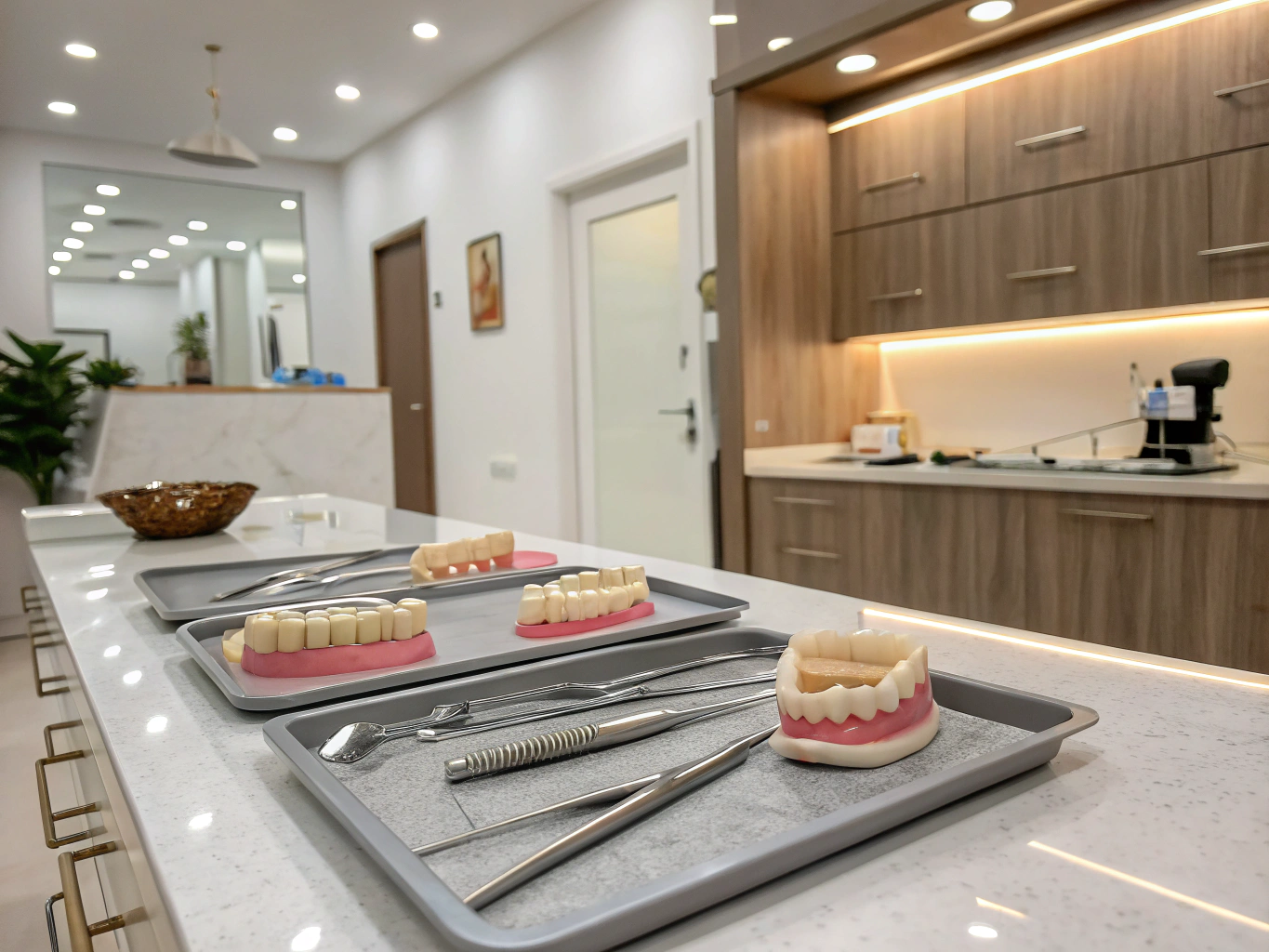
How Crown Prep Differs for Various Types of Crowns
Crown preparation is a critical step in restorative dentistry that directly impacts the success, durability, and aesthetics of dental crowns. Understanding how Dominate Dental approaches crown prep reveals the nuances involved in preparing teeth for different crown materials and designs. Each crown type requires a unique preparation technique tailored to its specific properties and intended use.
The Fundamentals of Crown Preparation
Before diving into the specifics, it’s important to highlight what crown preparation entails. Essentially, crown prep involves shaping the tooth to create sufficient space for the crown while preserving as much healthy tooth structure as possible. The prep must also provide mechanical retention and resistance to ensure the crown stays securely in place under biting forces.
Key Factors Influencing Crown Prep
- Material Thickness: Different crown materials require varying thicknesses, affecting the amount of tooth reduction.
- Margin Design: The edge where the crown meets the tooth, which varies depending on aesthetics and material compatibility.
- Retention Needs: Some crowns demand more aggressive shaping for proper adhesion or mechanical lock.
Crown Prep for Porcelain-Fused-to-Metal (PFM) Crowns
PFM crowns combine strength and aesthetics by fusing porcelain to a metal substructure. Preparing a tooth for PFM crowns requires enough reduction to accommodate both the metal base and porcelain overlay. Typically, this means about 1.5 to 2.0 mm of occlusal reduction and 1.0 to 1.5 mm on the axial walls.
The margin design is usually a chamfer or shoulder with a bevel to allow a smooth transition between metal and porcelain. Careful margin preparation is crucial to avoid porcelain chipping and to ensure a seamless fit. The tooth prep must also provide adequate retention to resist dislodgement, especially since PFM crowns rely partly on mechanical retention.
Crown Prep for All-Ceramic Crowns
All-ceramic crowns, prized for their superior aesthetics and biocompatibility, require a more conservative and precise preparation. Because ceramics are brittle and require a uniform thickness for strength, the tooth is usually reduced by about 1.5 mm occlusally and 1.0 to 1.5 mm axially with smooth, rounded edges.
The margin design often favors a shoulder finish line to provide a strong, well-supported edge for the ceramic material. Unlike PFM crowns, all-ceramic crowns depend heavily on adhesive bonding, so the preparation must create a surface that facilitates this chemical retention without aggressive mechanical undercuts.
Crown Prep for Gold Crowns
Gold crowns are known for their durability and minimal wear on opposing teeth. Because gold is a malleable metal, the tooth reduction for gold crowns is less aggressive compared to other types. Typically, 1.0 to 1.5 mm of occlusal reduction and 0.8 to 1.0 mm on the axial walls is sufficient.
The margins for gold crowns are usually a chamfer or feather edge. The smooth margins allow the gold to flow and adapt well during casting, ensuring excellent marginal integrity. Since gold crowns rely mostly on mechanical retention and precise fit, the prep must ensure adequate taper and parallelism without excessive tooth removal.
Special Considerations for Zirconia Crowns
Zirconia crowns combine strength and aesthetics with a translucent appearance. The preparation for zirconia crowns usually requires 1.0 to 2.0 mm of reduction, depending on the zirconia type and translucency level. The margin design prefers a rounded shoulder to avoid stress concentrations that could cause fractures.
Zirconia crowns require a smooth preparation surface to optimize the fit and bonding if used with resin cements. The tooth prep must balance sufficient reduction for thickness with conservation of tooth structure to maintain strength and avoid sensitivity.
Conclusion
Effective crown preparation is not one-size-fits-all. It varies significantly depending on the crown material and design, highlighting the need for tailored techniques that optimize the longevity and function of the restoration. By understanding these variations—from PFM to all-ceramic, gold, and zirconia crowns—dental professionals can better plan and execute preparations that meet both functional and aesthetic goals.
For a deeper dive into expert crown prep strategies, explore how Dominate Dental approaches crown prep and their specialized techniques.
Leave a Reply